Earth fault loop impedance calculator
Use our Earth Fault Loop Impedance Calculator to quickly determine the maximum permitted Zs values for your electrical installation. Ensure your circuits meet safety standards, comply with regulations, and maintain proper disconnection times - all in just a few clicks.

How to use the fault loop impedance calculator
You can use the Earth Fault Loop Impedance Calculator in three simple steps:
1. Select the device type and characteristic of your protective device (e.g., circuit breaker or fuse). This determines the appropriate multiplication coefficient used in the calculation.
2. Choose the nominal current rating of your device. The nominal current and multiplication coefficient are used together to calculate the required fault current for proper tripping.
3. Enter the nominal supply voltage of your installation.
After you’ve entered these parameters, the calculator will automatically determine the maximum permissible earth fault loop impedance (Zs) for your circuit.
How to interpret the earth fault loop impedance calculator results
The Earth Fault Loop Impedance Calculator provides the maximum permissible Zs value for the selected protective device and circuit parameters. This value represents the highest loop impedance that will still allow the protective device (such as an MCB or fuse) to disconnect the supply within the required time during an earth fault.
Please note that the calculator’s result does not include correction factors such as the 2/3 (0.67) factor recommended in standards, nor does it account for thermal or environmental influences (e.g., temperature rise, conductor resistance increase, or connection quality).
When comparing your measured Zs value on site with the calculated maximum Zs, it’s good practice to apply a safety margin, typically by multiplying the calculated limit by 0.67. This adjustment compensates for potential variations in temperature, test conditions, and conductor resistance, helping ensure compliance and safe disconnection under real operating conditions.
By considering these factors, you can more accurately assess whether your circuit meets regulatory requirements and maintains a safe fault protection margin.
Earth fault loop impedance formula
The earth fault loop impedance (Zs) represents the total impedance of the fault current path — from the point of fault, through the protective conductor and supply system, and back to the source.
It can be calculated as:
Where:
ZS is the maximum permitted Zs, U0 is the nominal voltage to earth, and Ia is the current required to safely trip the MCB or fuse.
Earth fault loop impedance calculation example
A calculation example for determining the maximum permitted Zs for a B16 MCB is as follows:
Loop impedance testers
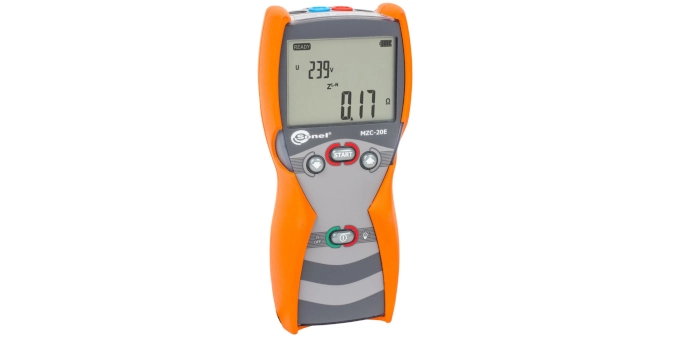
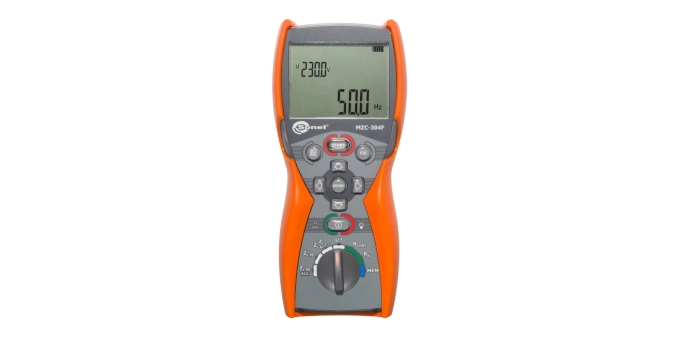
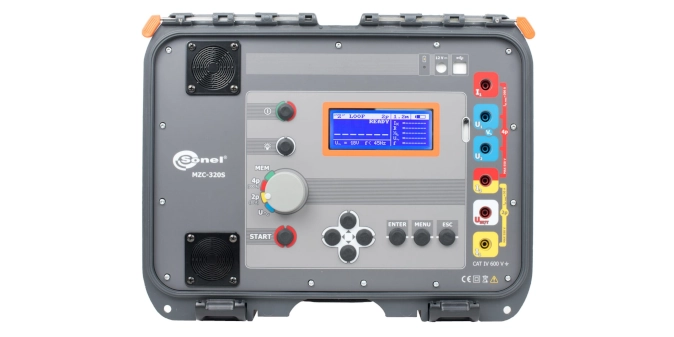
To accurately determine the maximum permitted Zs value for an electrical installation, appropriate test equipment is essential. Depending on the MCB rating and whether RCD protection is present, we recommend the following models from our product range.